
|
Quantity
|
Out of stock
|
||
|
|
|||
|
|
|||
Gear Straps — Secure Attachment, Compression, and Efficient Packing
During trekking, travel, and outdoor adventures, properly securing your gear is just as important as packing it correctly. A sleeping pad, tent, jacket, snowshoes, or other equipment should remain firmly attached to your backpack or packed securely inside it, even while moving through rough terrain.
This is exactly where gear straps become essential. These simple but highly important accessories help compress, secure, and organize outdoor equipment. The two most common types are compression straps and backpack sternum straps, each serving a different purpose.
When choosing gear straps, it is especially important to pay attention to the quality of the webbing and hardware, as these components determine the reliability and durability of the entire system.
What Are Gear Straps?
Gear straps are adjustable webbing straps with buckles or other fastening hardware that are used to secure and compress outdoor equipment.
They help:
-
attach gear to a backpack;
-
reduce the volume of equipment;
-
improve packing efficiency;
-
prevent gear from shifting during movement;
-
make carrying equipment more stable and comfortable.
High-quality gear attachment straps are used in nearly every type of outdoor activity, from day hikes to mountaineering expeditions.
Compression Straps
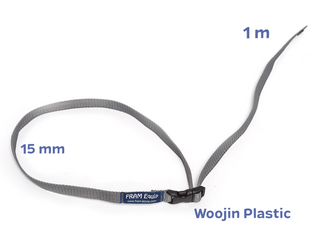
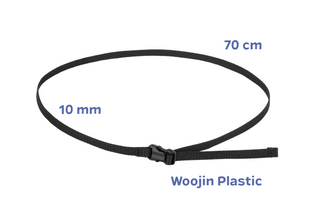
Compression straps are designed to reduce the packed size of equipment and secure it firmly in place.
They are commonly used for:
-
sleeping pads;
-
tents;
-
sleeping bags;
-
insulated clothing;
-
snowshoes;
-
additional equipment attached to the outside of a backpack.
Once tightened, the webbing compresses the gear, making it more compact and stable during movement.
The main advantages of compression straps include:
-
reduced packed volume;
-
secure attachment;
-
prevention of gear movement;
-
more efficient use of backpack space;
-
versatile outdoor applications.
For trekking and expedition use, it is particularly important that a compression strap does not loosen under load or slip on the fabric.
Backpack Sternum Straps
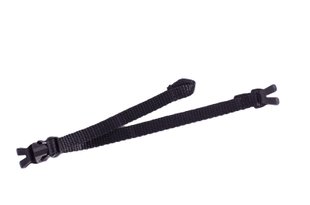
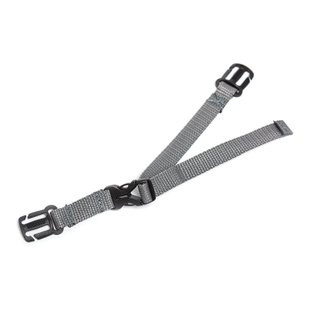
A backpack sternum strap connects the shoulder straps across the chest and helps stabilize the backpack while moving.
It is especially useful during:
-
trekking;
-
mountaineering;
-
running with a backpack;
-
ski touring;
-
cycling trips;
-
carrying heavy loads for extended periods.
A properly adjusted sternum strap:
-
prevents the shoulder straps from spreading apart;
-
improves backpack stability;
-
reduces strain on the shoulders;
-
creates a more secure fit;
-
increases comfort on long routes.
Its benefits become particularly noticeable on rocky terrain, steep ascents, technical trails, and during running or fast hiking.
Webbing Quality
The webbing is the foundation of any gear strap, so its quality is critically important.
A good webbing strap should be:
-
strong;
-
abrasion-resistant;
-
dimensionally stable under load;
-
moisture-resistant;
-
UV-resistant;
-
durable over years of use.
Low-quality webbing may stretch, slip, or lose strength after repeated use.
For outdoor equipment, durable synthetic webbing designed for repeated tightening and high loads is the preferred choice.
Hardware Quality
The hardware — buckles, ladder locks, adjusters, and other fastening components — is just as important as the webbing itself.
High-quality hardware should:
-
hold the webbing securely;
-
adjust smoothly;
-
resist accidental release;
-
perform reliably in low temperatures;
-
withstand impact and mechanical stress.
Well-made gear attachment straps use durable plastic or metal components designed for long-term outdoor use.
How to Choose Gear Straps
Before buying gear straps, think about how you intend to use them.
The most important factors include:
-
length;
-
webbing width;
-
strength;
-
hardware quality;
-
ease of adjustment.
Length
Shorter straps are suitable for:
-
sleeping pads;
-
jackets;
-
smaller pieces of equipment.
Longer straps are better for:
-
tents;
-
snowshoes;
-
bulky outdoor gear;
-
attaching equipment externally to a backpack.
Webbing Width
Wider webbing distributes pressure more evenly and is less likely to damage or compress the fabric of the attached gear.
Narrower straps are lighter and more compact, making them popular in lightweight hiking systems.
Ease of Adjustment
A good strap should be easy to tighten and loosen, even while wearing gloves or in cold weather.
This is particularly important for winter hiking, ski touring, and mountaineering.
How to Use Gear Straps Correctly
For maximum effectiveness, straps should be tightened evenly.
When compressing gear, tighten the straps gradually rather than applying excessive force all at once.
When attaching equipment to a backpack, make sure the load cannot shift sideways or downward during movement.
A backpack sternum strap should generally be positioned across the upper chest area; placing it too high or too low reduces its effectiveness.
How to Choose the Right Straps for Your Needs
For short trips, a few versatile compression straps are usually sufficient.
For trekking, lightweight but durable straps with high-quality hardware are the best choice.
For heavy loads and expedition use, wider webbing, reinforced buckles, and maximum abrasion resistance become more important.
A well-designed set of gear straps provides secure gear attachment, improves compression, simplifies packing, and makes trekking and travel significantly more comfortable. That is why high-quality compression straps, backpack straps, and gear attachment straps remain an essential part of any modern outdoor equipment system.