




|
Quantity
|
Out of stock
|
||
|
|
|||
|
|
|||
Outdoor Accessories — Gear Organization and Comfort While Traveling
Comfort on the trail depends on more than just your essential equipment. A backpack, tent, sleeping bag, and clothing form the foundation of your kit, but small outdoor accessories often make your gear much easier and more convenient to use.
They help organize items inside your backpack, provide quick access to essentials, protect equipment from moisture, dirt, and damage, and make clothing and sleeping gear more compact when packed.
This becomes especially important during trekking and multi-day hikes. When every item has its own place, you do not need to unpack your entire backpack just to find a first aid kit, documents, or an extra layer of clothing.
Properly selected hiking accessories can also help extend the lifespan of your main equipment. Protective covers reduce damage during transportation, rain covers protect gear from precipitation and dirt, while stuff sacks help separate clean and dry items from wet or dirty ones.
That is why travel accessories are more than optional additions to your kit. They are practical tools that help create an efficient system for hiking, camping, traveling, and other outdoor activities.
How Do Accessories Help Organize Your Gear?
The longer the trip, the more equipment you usually need to carry.
Clothing, a first aid kit, toiletries, documents, electronics, sleeping equipment, and numerous small items all need to fit inside your backpack or luggage.
If everything is simply packed together, finding what you need can quickly become difficult.
That is why effective gear organization begins with separating items according to their purpose.
A compression sack can be used for bulky clothing or a sleeping bag. Separate stuff sacks can hold clean clothes and small pieces of equipment. Documents and money can be kept in a compact travel wallet or document pouch, while toiletries can be stored separately in a toiletry bag.
This turns a collection of individual items into a clear and practical packing system.
Such an approach becomes particularly useful on multi-day hikes, when you need to pack and unpack your backpack every day.
How Do Outdoor Accessories Protect Your Gear?
Quality outdoor gear is designed for demanding conditions, but proper protection can help extend its useful life.
During a trip, equipment is exposed to moisture, mud, rocks, transportation, and contact with other items inside your luggage.
For example, a dedicated cover can protect equipment from mechanical damage during transportation. A backpack rain cover reduces exposure to rain and helps keep dirt off the outer fabric. Stuff sacks can isolate wet or dirty clothing from dry gear.
When selecting accessories for travel, it therefore makes sense to consider not only convenience but also how well they protect the most important and valuable parts of your equipment.
Materials Used for Outdoor Accessories
Different materials are used for outdoor gear depending on what matters most for a particular product: minimum weight, water resistance, strength, or abrasion resistance.
Nylon
Nylon provides a good combination of low weight and durability, making it widely used for outdoor accessories.
It can be used for stuff sacks, bags, covers, and other equipment that needs to be carried inside or attached to a backpack.
Low weight is particularly important for trekking and hiking. A few extra grams may seem insignificant on a single accessory, but the combined weight of many small items can make a noticeable difference to your overall pack weight.
Oxford
Oxford is a durable synthetic fabric characterized by its distinctive woven structure.
It is commonly used for accessories where abrasion resistance, shape retention, and practicality are important.
Depending on its density and coating, Oxford fabric can be used for bags, toiletry bags, protective covers, first aid pouches, and other accessories that regularly come into contact with equipment and different surfaces.
Cordura®
Cordura® is particularly suitable for equipment exposed to significant mechanical stress.
The material offers high abrasion resistance, making it a good choice for bags, protective covers, first aid pouches, and other items frequently used in demanding outdoor conditions.
Cordura® is especially useful when durability is a higher priority than achieving the lowest possible weight.
Membrane Fabrics
Membrane fabrics can be used for accessories where additional protection from external moisture is required.
However, the fabric itself is only one part of the system. The water resistance of the finished product also depends on its construction, seams, closures, and other details.
For this reason, the use of membrane fabric does not automatically make an accessory completely waterproof.
How to Choose Outdoor Accessories
Before choosing an accessory, start by determining exactly what task you need it to perform.
If your goal is to reduce the packed volume of bulky equipment, look at compression sacks and their compression systems.
If you need to organize smaller items, consider the number of compartments, ease of access, and overall dimensions.
For protection against mechanical damage, material strength and abrasion resistance become the main priorities.
If precipitation is the primary concern, pay attention to the water resistance of both the fabric and the overall construction.
Weight is another important consideration. A few additional grams may not matter much for city travel or a flight, but on a long-distance hike, every piece of equipment has to be carried on your back.
Essential Accessories for Hiking and Travel
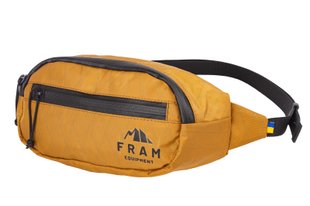
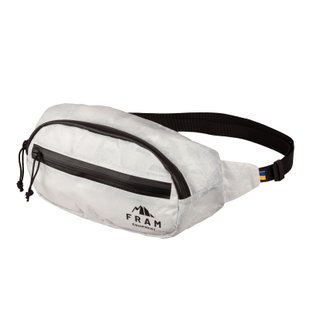
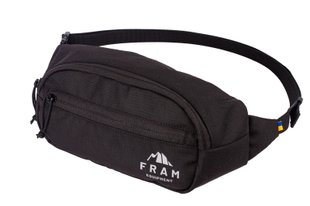
Waist Packs
A waist pack keeps essential items close at hand.
It can hold your phone, documents, money, keys, snacks, and other small items you may need throughout the day.
For travel, useful features include convenient internal organization and reliable closures. For active use, look for a stable fit, low weight, and an adjustable belt.
Choosing the right capacity is also important. A pack that is too large may interfere with movement, while one that is too small will not hold everything you need.
Document Pouches and Wallets
Documents, bank cards, and cash are items that should be stored securely and remain easy to access.
Travel wallets and document pouches should be compact, lightweight, and logically organized inside.
For longer journeys, separate compartments for a passport, cards, cash, tickets, and other documents can make organization much easier.
When choosing one, consider its dimensions, number of compartments, closure system, and material.
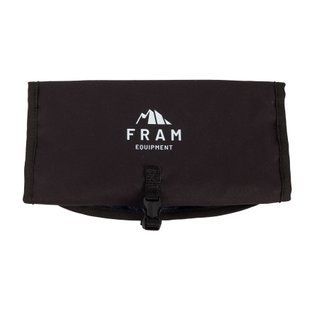
Toiletry Bags
A toiletry bag keeps personal hygiene products together and separates them from clothing and other equipment.
This is practical not only for regular travel but also for camping and multi-day hiking.
Useful characteristics include low weight, easy opening, sufficient internal organization, and a material that can be cleaned easily.
Choose the size according to the length of your trip and the amount of personal care equipment you actually use.
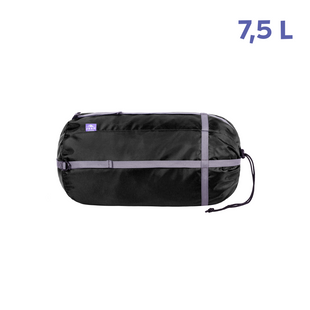
Compression Sacks
The main purpose of a compression sack is to reduce the volume of soft and bulky equipment.
It can be used for sleeping bags, insulated clothing, and other items that take up considerable space inside a backpack.
Compression straps reduce the packed volume, which can be especially useful when backpack space is limited.
When choosing a compression sack, consider whether its capacity matches your equipment, as well as the strength of the fabric, compression straps, and hardware.
Maximum compression is not always necessary. A compression sack should make packing more efficient without placing unnecessary stress on your equipment.
Stuff Sacks
Simple stuff sacks are one of the easiest ways to improve gear organization inside a backpack.
One can contain spare clothing, while another can be used for underwear, electronics, or small accessories.
On a multi-day route, separating dry and clean equipment from wet or dirty items can be particularly useful.
Important characteristics include weight, capacity, material, and closure type. If you use several stuff sacks, it is also helpful if they are easy to distinguish from one another.
Backpack Rain Covers
A backpack rain cover creates an external barrier against rain, wet snow, and mud.
It becomes particularly useful during prolonged precipitation, when the outer fabric of a backpack can gradually absorb moisture.
The most important consideration is choosing the correct size for the capacity of your backpack.
A rain cover should fully cover the pack while remaining secure during movement and in strong winds.
Even a good backpack cover does not guarantee that the entire system will be completely waterproof. Critical equipment inside your backpack should therefore have additional protection from moisture when necessary.
Protective Covers
Protective covers can be used for different types of outdoor equipment during storage, transportation, or travel.
They help protect gear from dirt, abrasion, and accidental mechanical damage.
When choosing a cover, consider what will be stored inside. Lightweight equipment may only require a thin fabric, while heavy items or equipment with sharp components need a much more durable material.
The cover should also match the shape and size of the equipment to avoid unnecessary bulk.
Gear Straps
Gear straps are a simple and versatile piece of outdoor gear.
They can be used to secure equipment more compactly, organize items, or attach certain pieces of gear.
For hiking, the most important characteristics are strong webbing, reliable hardware, and easy adjustment.
Choose the strap length according to the equipment and purpose for which you intend to use it.
First Aid Pouches
A first aid pouch helps keep first aid supplies together in one organized and easily accessible place.
Its construction should allow you to find what you need quickly without searching through all of its contents.
For this reason, good internal organization, visibility, a reliable closure, and a material suitable for outdoor conditions are important characteristics.
The required size depends on the type of trip. A first aid kit for a short hike will be very different from one intended for a group on a multi-day trek or expedition.
It is important to remember that the pouch itself only organizes and protects its contents. The actual first aid supplies should be selected separately according to the route, number of participants, and conditions of the trip.
What Outdoor Accessories Should You Take on a Trip?
There is no universal set of accessories that needs to be carried on every trip.
For a short journey, a waist pack, document wallet, and several stuff sacks may be enough.
For multi-day trekking, compression sacks, a backpack rain cover, a first aid pouch, and an organized system of stuff sacks become more useful.
For camping, protective covers, toiletry bags, and accessories for organizing larger amounts of equipment may be more important.
When choosing outdoor accessories, it is therefore better to consider not how many functions an item has, but how effectively it solves a specific problem in your own travel system.
Well-chosen hiking and travel accessories help keep your gear organized, make essential items easier to find, protect equipment, and use backpack space more efficiently. The result is less time spent dealing with packing and organization — and more time for the journey itself.