

|
Quantity
|
Out of stock
|
||
|
|
|||
|
|
|||
Compression Sacks — More Space in Your Backpack Without Extra Weight
When hiking, trekking, and traveling, the volume of your gear is often just as important as its weight. A sleeping bag, insulated clothing, spare layers, and other soft equipment can take up a surprising amount of space, even when they are relatively lightweight. This is exactly where compression sacks become invaluable — they significantly reduce the packed volume of your gear and make backpack packing far more efficient.
If you have ever tried to fit a winter sleeping bag or a puffy insulated jacket into a hiking backpack, you already know how useful a compression sack can be. It not only saves space but also helps organize your equipment and protect it during transportation.
What Is a Compression Sack?
A compression sack is a specialized storage sack equipped with compression straps or a compression system that allows soft gear to be compressed after packing.
It is most commonly used for:
-
sleeping bags;
-
down or synthetic insulated jackets;
-
fleece clothing;
-
spare clothing;
-
lightweight outdoor gear.
After the gear is packed inside, the compression straps are tightened, reducing the overall volume. As a result, your backpack can be packed much more efficiently and your equipment takes up significantly less space.
This is why compression sacks for sleeping bags are standard equipment for many hikers, trekkers, climbers, and travelers.
Why Use Compression Sacks?
The biggest advantage of a compression sack is space efficiency.
Reducing the volume of your gear allows you to:
-
fit more equipment into your backpack;
-
use a smaller backpack;
-
organize gear more effectively;
-
create a cleaner and more efficient packing system.
This becomes especially important during multi-day trips, where every liter of backpack space matters.
For example, a winter sleeping bag can occupy a large portion of a backpack, but when compressed it often becomes dramatically more compact.
Compression Sacks for Sleeping Bags
The most common application is compression sacks for sleeping bags.
A sleeping bag is usually one of the bulkiest pieces of outdoor equipment, so compressing it provides the greatest space savings.
A properly sized compression sack helps:
-
reduce the packed size of a sleeping bag;
-
protect it from dirt;
-
make backpack packing more compact;
-
improve overall gear organization.
It is important to remember that a sleeping bag should not be stored compressed for long periods. A compression sack is intended primarily for transportation, while long-term storage should be done in a large storage sack or with the sleeping bag fully lofted.
Compression Sacks for Clothing and Gear
In addition to sleeping bags, compression sacks for clothing and gear are extremely useful.
They are ideal for:
-
insulated clothing;
-
fleece jackets;
-
spare clothing;
-
gloves;
-
hats;
-
lightweight equipment.
Compression sacks make it easy to create separate packing modules inside your backpack.
For example, one sack can hold warm clothing, another can store spare clothes, and a third can be dedicated to your sleeping bag.
This greatly improves gear organization and makes it easier to find exactly what you need on the trail.
How to Choose a Compression Sack
Before you buy a compression sack, consider what type of gear you plan to compress.
A sleeping bag requires a different volume than clothing or other equipment.
The most important selection criteria are:
-
capacity;
-
weight;
-
material durability;
-
compression system design;
-
water resistance.
A properly sized compression sack should compress your gear effectively without placing excessive stress on the fabric or insulation.
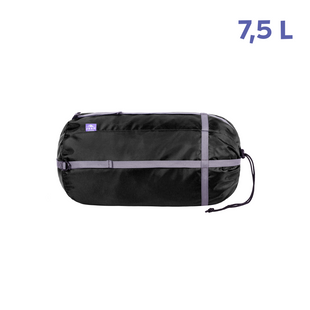
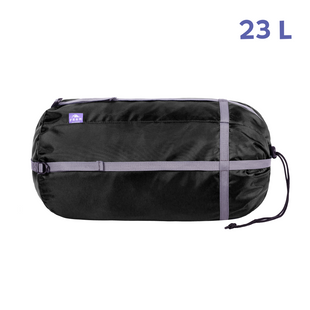
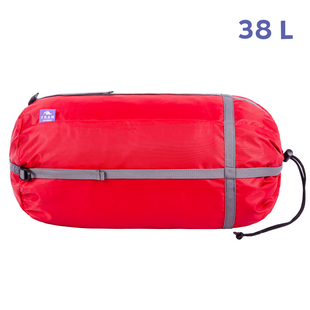
Capacity
Choosing the correct size is the most important factor.
A sack that is too large will not compress efficiently.
A sack that is too small will be difficult to pack.
Summer sleeping bags usually require smaller compression sacks, while winter sleeping bags need larger capacities.
For clothing, several smaller compression sacks are often more practical than one large one.
Weight
For trekking and hiking, every gram matters.
Lightweight compression sacks help reduce overall pack weight while maintaining full functionality.
This is especially important for hikers building an ultralight backpacking setup.
Material
The material should be durable enough to withstand repeated compression and transportation.
Most compression sacks are made from lightweight synthetic fabrics with good abrasion resistance.
For expeditions and intensive outdoor use, stronger fabrics and high-quality hardware are worth prioritizing.
Compression System
Most compression sacks use webbing straps with buckles.
Look for a design that allows the straps to tighten evenly and the hardware to remain secure under load.
A good compression system makes it easy to adjust the level of compression depending on what is packed inside.
Water Resistance
Some compression sacks are made from water-resistant fabrics or feature protective coatings.
These materials help protect a sleeping bag or clothing from rain, condensation, and moisture inside a backpack.
However, even water-resistant fabrics are not always fully waterproof, so especially sensitive gear may still require additional protection.
How to Use a Compression Sack Correctly
To achieve effective compression, follow a few simple guidelines.
First, pack the sleeping bag or clothing evenly inside the sack.
Then tighten the compression straps gradually and evenly.
Avoid compressing insulation excessively, especially down insulation, unless it is necessary for transportation.
After your trip, remove the gear from the compression sack and allow it to fully loft and recover its shape.
How to Choose the Right Compression Sack for Your Needs
For short summer hikes, a lightweight compression sack for clothing and gear is usually sufficient.
For winter hiking and expeditions, a more durable model with greater capacity and better water resistance is often the better choice.
For sleeping bags, it is best to use a dedicated compression sack for sleeping bags that matches the size of your sleeping bag.
If you travel frequently or spend a lot of time in the mountains, owning several compression sacks of different sizes can make gear organization significantly more efficient.
A well-chosen compression sack saves space, keeps your backpack organized, and makes packing much more efficient. That is why compression sacks for sleeping bags and compression sacks for clothing and gear remain some of the most useful accessories for trekking, hiking, and any type of travel where compact packing and efficient gear organization matter.