

|
Quantity
|
Out of stock
|
||
|
|
|||
|
|
|||
Snowshoes — Freedom of Movement in Deep Snow
During winter hiking, mountaineering, and backcountry travel, deep snow is one of the main factors that slows down movement. Without specialized equipment, every step can sink deep into the snow, dramatically increasing both effort and travel time.
This is exactly where snowshoes become invaluable. They distribute body weight across a larger surface area, reducing how deeply you sink into the snow and allowing you to move much faster and more efficiently in winter conditions.
For winter hiking, mountaineering, and many alpine routes, hiking snowshoes can be the piece of gear that prevents a trip from being delayed or completely derailed by deep snow.
The History of Snowshoes
Snowshoes are one of the oldest forms of winter travel equipment.
They were used by Indigenous peoples across North America, Scandinavia, and Siberia long before the development of modern skis. Early snowshoes were made from wooden frames woven with leather straps or rawhide, allowing hunters and travelers to move across deep snow where walking would otherwise have been extremely difficult.
Over time, traditional wooden designs evolved into aluminum, plastic, and modern composite constructions. Today, snowshoes for hiking are widely used by hikers, mountaineers, rescue teams, and anyone who regularly travels through snowy mountain terrain.
Why Use Snowshoes?
The primary purpose of snowshoes is to increase the surface area of your footprint on snow.
This allows them to:
-
reduce sinking in deep snow;
-
increase travel speed;
-
conserve energy;
-
make deep snow travel significantly easier;
-
improve safety on winter routes.
Hiking snowshoes are particularly useful for:
-
winter hiking;
-
mountaineering;
-
backcountry travel;
-
ski touring approaches;
-
winter expeditions;
-
deep powder and untracked snow.
Types of Snowshoes
Modern snowshoes for hiking can generally be divided into two main categories: rigid plastic snowshoes and compact fabric snowshoes.
Plastic Snowshoes
Plastic snowshoes are the most common and widely available type.
Advantages:
-
excellent flotation in deep snow;
-
durable construction;
-
easy to use;
-
wide availability.
Disadvantages:
-
relatively heavy;
-
bulky to transport;
-
less convenient to carry on a backpack;
-
less efficient on steep terrain;
-
limited performance on firm snow and alpine firn.
Plastic models work well on relatively gentle snowy terrain but may be less versatile in technical mountain environments.
Compact Fabric Snowshoes
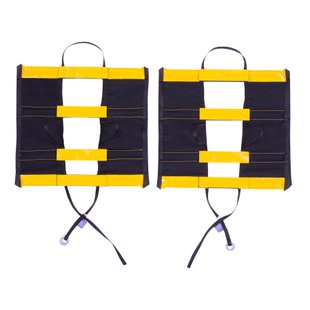
Modern fabric snowshoes are designed for users who need an ultralight and highly packable solution for mountain travel.
These models are particularly popular among experienced mountaineers and winter hikers because they can easily be carried even when you are unsure whether they will be needed during the trip.
Advantages of P.F.P Fabric Snowshoes
P.F.P hiking snowshoes offer several significant advantages over traditional plastic models.
Extremely Lightweight
They are 3-7 times lighter than plastic snowshoes or skis.
For mountain travel, where every gram matters, this is a major advantage.
Dramatically Faster Travel
In deep snow, P.F.P snowshoes can increase travel speed by approximately 2-5 times.
This means less fatigue, faster progress, and more energy available for demanding sections of the route.
Performance on Steep Terrain and Firn
Unlike most traditional snowshoe designs, fabric snowshoes allow you to travel on steep terrain and firm alpine firn.
This makes them particularly valuable for mountaineering and technical winter routes.
Secure Fit
The P.F.P design fits securely on the boot and provides additional stability for crampons.
This improves control and efficiency in demanding winter conditions.
Compatibility with Most Crampons
P.F.P snowshoes are compatible with most common crampon models, making them a highly versatile addition to a mountaineering or winter trekking gear setup.
Why Compact Snowshoes Are Especially Practical
One of the greatest advantages of fabric snowshoes is that they are easy to carry “just in case.”
Many winter routes contain only two or three sections where snowshoes are truly necessary. However, those few sections can easily turn into an extra day or two of difficult trail breaking if you do not have the right equipment.
That is why compact snowshoes for hiking often serve as insurance against disrupted plans. They occupy very little space, add minimal weight to your backpack, and can dramatically improve both speed and comfort in deep snow.
If you are planning a winter mountain trip, it is worth carrying snowshoes even when the forecast appears favorable.
What Should You Look for When Choosing Snowshoes?
Before buying snowshoes, consider the conditions you expect to encounter.
The most important factors are:
-
weight;
-
packed size;
-
terrain type;
-
expected snow depth;
-
crampon compatibility;
-
binding security;
-
material durability.
For short winter walks, traditional plastic snowshoes may be perfectly adequate.
For mountaineering, technical winter hiking, and steep alpine terrain, lightweight fabric snowshoes are often the more versatile and efficient choice.
How to Choose the Right Snowshoes
For relatively flat snowy terrain, classic hiking snowshoes are usually a reliable option.
For winter hiking in the mountains, technical trekking, and mountaineering routes, compact fabric snowshoes provide an excellent combination of low weight, high efficiency, and compatibility with crampons.
Well-designed snowshoes help you move significantly faster through deep snow, conserve energy, and make winter hiking, mountaineering, and alpine travel considerably more comfortable and efficient. That is why hiking snowshoes, snowshoes for hiking, and modern snowshoes remain some of the most valuable pieces of equipment for winter mountain adventures.