




|
Quantity
|
Out of stock
|
||
|
|
|||
|
|
|||
Stuff Sacks — Organizing Your Gear for Travel and Outdoor Adventures
Proper gear organization can make a significant difference during a trip. Whether you're packing for a weekend getaway, a multi-day trek, or an expedition, a stuff sack helps keep your equipment organized, protected, and easy to find.
Unlike compression sacks, which are designed to reduce volume, travel stuff sacks focus primarily on organizing gear. They help separate clothing, sleeping equipment, electronics, hygiene products, and other essentials, making packing and unpacking much faster and more efficient.
For hiking, camping, and travel, a simple gear organizer can become one of the most useful accessories in your backpack.
What Is a Stuff Sack?
A stuff sack is a lightweight bag designed to store and organize equipment inside a backpack, duffel bag, or luggage.
Its primary purpose is not compression but organization. Instead of packing everything together, you can divide your equipment into categories and store each group separately.
For example:
-
spare clothing;
-
base layers;
-
sleeping clothes;
-
electronics;
-
food supplies;
-
accessories;
-
hygiene products.
This approach makes gear easier to find and helps maintain order throughout your trip.
Why Use Stuff Sacks?
A well-organized backpack saves time and reduces frustration on the trail.
Instead of unpacking your entire bag to find a single item, you can quickly locate exactly what you need.
The main advantages of using stuff sacks for travel include:
-
better gear organization;
-
easier packing and unpacking;
-
protection from dirt;
-
separation of clean and dirty clothing;
-
more efficient use of backpack space;
-
quicker access to essential items.
For longer trips, these benefits become even more noticeable.
Fabric Stuff Sacks vs Mesh Stuff Sacks
Modern outdoor stuff sacks are generally available in two main types: fabric and mesh.
Fabric Stuff Sacks
Fabric stuff sacks are the most versatile option.
Their advantages include:
-
protection from dirt and dust;
-
increased durability;
-
better protection against moisture;
-
lightweight construction;
-
a wide range of sizes and capacities.
They are commonly used for clothing, sleeping gear, electronics, and equipment that requires additional protection.
Nylon is one of the most popular materials due to its excellent balance of low weight and durability.
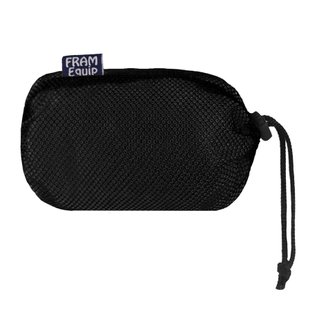
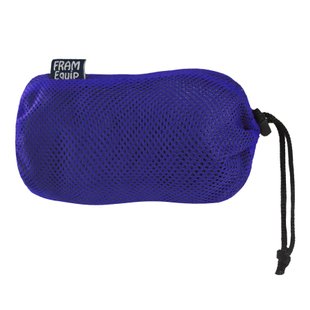
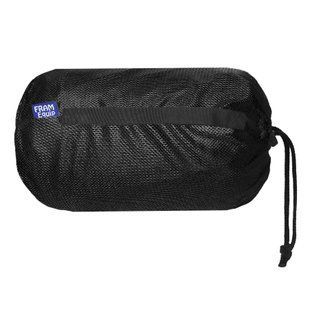
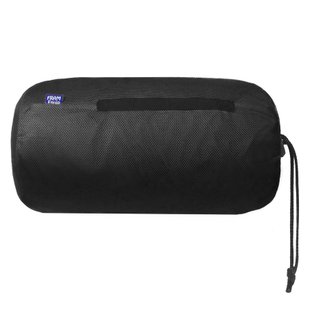
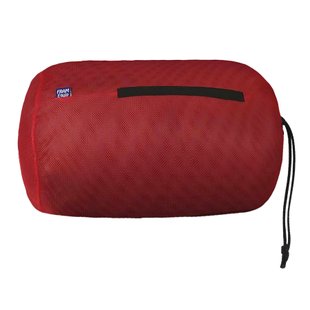
Mesh Stuff Sacks
Mesh stuff sacks prioritize ventilation and visibility.
Their key benefits include:
-
excellent airflow;
-
quick drying of damp items;
-
easy identification of contents;
-
lightweight construction.
Mesh organizers are often used for socks, laundry, footwear, camp clothing, and gear that may need ventilation after use.
They can also help prevent moisture buildup during extended trips.
Materials Used in Stuff Sacks
The material influences durability, weight, packability, and overall performance.
Nylon
Nylon is one of the most common materials used in gear organizers.
Its advantages include:
-
low weight;
-
good abrasion resistance;
-
compact pack size;
-
long service life.
Nylon stuff sacks work well for most hiking, travel, and camping applications.
Ripstop Nylon
Ripstop nylon incorporates a reinforced grid pattern that helps prevent tears from spreading.
Benefits include:
-
improved durability;
-
excellent weight-to-strength ratio;
-
resistance to damage during travel and trekking.
It is commonly used in lightweight outdoor equipment.
Mesh
Mesh materials maximize airflow.
They are particularly useful when storing:
-
damp clothing;
-
socks;
-
footwear;
-
camp gear;
-
laundry.
The main trade-off is reduced protection from moisture and dirt compared to solid fabrics.
What Should You Look for When Choosing a Stuff Sack?
Capacity
Choose the size according to the equipment you intend to store.
Smaller sacks work well for accessories and electronics, while larger models are suitable for clothing and sleeping gear.
Using several smaller organizers is often more practical than relying on a single large bag.
Weight
For trekking and backpacking, every gram matters.
Lightweight stuff sacks can help maintain good organization without significantly increasing pack weight.
Closure System
Different closure systems offer different advantages.
Common options include:
-
drawcord closures;
-
roll-top closures;
-
zipper closures.
The best choice depends on the type of gear and the level of protection required.
Durability
For frequent travel and outdoor use, durable materials and reliable construction are worth considering.
Pay attention to fabric quality, stitching, and hardware.
Visibility
Some travelers prefer color-coded organizers, while others use mesh sacks to identify contents immediately.
A clear organization system can save considerable time during a trip.
How to Build an Effective Gear Organization System
The most efficient approach is to group equipment by category.
For example:
-
one sack for spare clothing;
-
one for sleeping clothes;
-
one for electronics;
-
one for hygiene products;
-
one for accessories;
-
one for food or cooking items.
This system makes it easy to locate gear and helps keep your backpack organized throughout the trip.
For longer journeys, it can also help separate clean items from used or wet clothing.
How to Choose the Right Stuff Sack
Before you buy a stuff sack, think about how and where you travel.
For travel, convenient organization and easy access are often the main priorities.
For camping, larger capacities and simple packing systems may be more useful.
For trekking, low weight, durability, and efficient use of backpack space become especially important.
Fabric stuff sacks offer greater protection and versatility, while mesh organizers provide superior ventilation and visibility.
A well-designed travel stuff sack or gear organizer helps keep equipment organized, protects your belongings, simplifies packing, and makes every trip more comfortable. Whether you're preparing for a short journey, a camping trip, or a long-distance trek, an effective organization system allows you to spend less time searching for gear and more time enjoying the adventure.