





|
Quantity
|
Out of stock
|
||
|
|
|||
|
|
|||
Membrane Clothing — Protection from Rain, Wind, and Severe Weather
In the mountains, weather can change much faster than in the city. A sunny morning can turn into prolonged rain, while strong winds and wet snow may appear at higher elevations. On a multi-day route, waiting for bad weather to pass is not always an option. This is exactly where membrane clothing becomes essential.
Its main purpose is to create a protective outer layer that prevents precipitation and wind from penetrating while allowing water vapor generated during physical activity to escape.
That is why membrane outdoor clothing is widely used for trekking, mountaineering, multi-day hiking, running, winter ascents, and other activities where reliable rain protection and performance in challenging weather conditions are essential.
What Is a Membrane?
A membrane is an extremely thin functional layer combined with textile materials to create waterproof clothing.
Its purpose is to perform two functions that may seem contradictory: prevent water from penetrating from the outside while helping water vapor escape from inside the garment.
This is why protection from precipitation is not the only important characteristic of membrane clothing. If the material cannot efficiently release water vapor during active movement, moisture begins to accumulate inside.
This becomes particularly noticeable during intensive climbs with a backpack, running, ski touring, and mountaineering.
The performance of clothing with a membrane therefore depends largely on the balance between waterproofness and breathability.
Key Characteristics of Membranes
Waterproofness
Waterproofness indicates how much water pressure a material can withstand before moisture begins to penetrate through it.
This characteristic is usually expressed in millimeters of water column — mm H₂O.
The higher the value, the greater the water pressure the fabric can withstand.
As a general reference, waterproof ratings can be divided approximately as follows:
-
5,000–10,000 mm — protection from short periods of light to moderate precipitation;
-
10,000–20,000 mm — more substantial protection for travel, hiking, snow, and changeable weather;
-
over 20,000 mm — a high level of waterproof protection for prolonged exposure to challenging and very wet conditions.
However, choosing a membrane based solely on the highest possible number is not always the best approach. For any specific activity, the overall balance of the material's characteristics is more important.
Breathability
Breathability describes the material's ability to allow water vapor generated inside the clothing to escape.
One common way to express this characteristic is the amount of water vapor that can pass through one square meter of material over 24 hours: g/m²/24h.
This characteristic becomes particularly important during high-intensity activity.
For example, very high breathability may be less critical during a relaxed walk around the city. During fast trekking, running, or a demanding ascent, the body produces significantly more heat and moisture, increasing the demands placed on the garment's ability to release water vapor.
Even a high breathability rating does not mean that it is impossible to sweat inside a membrane jacket. During intense activity, the body may produce moisture faster than the material can transport it.
This is why mechanical ventilation is also important in technical membrane clothing — for example, underarm ventilation zippers.
What Types of Membranes Are There?
Membranes can work according to different principles. Outdoor clothing uses microporous, hydrophilic, and combined membrane technologies.
Microporous Membranes
Microporous membranes have a microscopic structure designed to prevent liquid water from penetrating from the outside while allowing water vapor to escape.
One of the best-known examples of this type of technology is Gore-Tex.
The main advantage of microporous membranes is their ability to combine a high level of precipitation protection with good breathability.
At the same time, their performance depends significantly on proper care. Dirt, body oils, and other contaminants can negatively affect the performance of the material.
For this reason, membrane clothing needs to be cleaned regularly and correctly.
Hydrophilic Membranes
Hydrophilic membranes do not use a system of microscopic open pores. Instead, moisture transfer occurs due to the properties of the material itself and the process of diffusion.
Polyurethane — PU — is commonly used for this type of membrane.
Water vapor moves through the material from the inside toward the outside, while external liquid water is prevented from penetrating through the membrane.
The advantages of hydrophilic membranes include good protection from precipitation and wind, elasticity, durability, and relatively simple maintenance.
One characteristic of this type of membrane is that moisture transfer may not feel immediate: effective diffusion depends on the difference in conditions between the inside and outside of the material.
Combined Membranes
Combined membrane technologies use more than one principle of moisture management.
Their purpose is to achieve an effective balance between waterproofness, breathability, durability, and protection of the membrane from contamination.
These materials are used in technical outdoor clothing designed for challenging conditions and prolonged use.
Hi-Pora Membrane
Hi-Pora is a hydrophilic polyurethane membrane used in outdoor clothing to provide protection from wind and precipitation.
The material creates a waterproof barrier while allowing water vapor to move from the inside toward the outside.
This makes Hi-Pora suitable for outerwear and accessories designed for wet, windy, and cold conditions.
This type of membrane can be used in hiking jackets, pants, and gloves.
Specific waterproofness and breathability ratings depend not only on the name of the membrane but also on the particular version of the material and fabric construction. When choosing a garment, it is therefore important to check the specifications provided for the particular model.
How Is a Membrane Combined with Fabric?
The membrane itself is extremely thin, so in finished outdoor clothing it forms part of a multi-component fabric.
One option is coating, where a functional layer is applied to the fabric in liquid form and then solidifies. This solution can be lighter and more affordable, although its durability depends on the particular technology used.
Another common method is lamination, where the membrane layer is bonded to the fabric. This construction is widely used in modern technical clothing and makes it possible to create different multi-layer materials.
2L, 2.5L, and 3L — Membrane Fabric Construction
In addition to the type of membrane itself, it is important to understand the construction of the entire fabric.
Two-Layer Construction — 2L
In a 2L construction, the outer fabric and membrane form one material, while a separate lining is typically used on the inside.
The lining protects the membrane from direct contact with the body and mechanical wear and can also make the garment more comfortable for everyday use.
However, it also adds weight and bulk.
This type of construction can be used for hiking and urban outerwear.
2.5-Layer Construction — 2.5L
In a 2.5L construction, instead of a full inner fabric layer, the membrane is protected by a thin applied layer or special print.
This makes it possible to significantly reduce the weight and packed volume of the garment.
For this reason, 2.5L construction is often used for lightweight membrane jackets that need to pack down small in a backpack and be taken out only when rain starts or the wind becomes stronger.
The trade-off can be lower durability compared with a more robust three-layer construction.
Three-Layer Construction — 3L
In a 3L construction, the outer fabric, membrane, and inner protective layer are bonded together into a single material.
This solution is primarily designed for intensive and prolonged use.
Three-layer fabrics are widely used in clothing for mountaineering, multi-day hiking, demanding trekking, and severe weather, where durability and reliable protection are especially important.
These materials can be more expensive and heavier than ultralight constructions, but their major advantage is increased durability.
What Types of Membrane Clothing Are There?
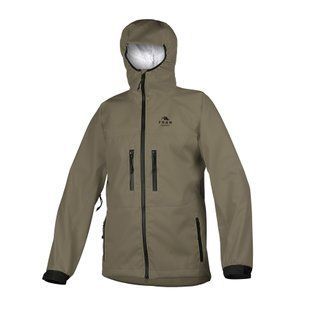
Membrane Jackets
A membrane jacket is the primary protective outer layer against rain, wet snow, and strong wind.
Lightweight models are used for running, fast trekking, and travel, where low weight and packability are especially important.
For multi-day hiking and mountaineering, priorities include material durability, a reliable hood, protected zippers, adjustable cuffs, and effective ventilation.
A membrane jacket itself is generally not the main insulating layer. Its primary function is to protect the clothing system from external weather conditions, while the necessary insulation is provided by the layers underneath.
Membrane Pants
Membrane pants protect the legs from rain, wet snow, and wind.
They are particularly useful for mountain hiking, winter trekking, and mountaineering, where prolonged exposure to moisture can quickly soak ordinary trekking pants.
They are often worn as a protective outer layer over regular hiking pants.
Long side zippers can be a particularly useful feature in hiking models, allowing the pants to be put on or removed without taking off hiking or mountaineering footwear.
Membrane Ponchos
A poncho provides precipitation protection in a somewhat different way.
Its loose construction creates a large protective barrier against rain and can also cover part of your equipment or backpack.
Ponchos are particularly practical for hiking and travel when a simple outer layer for rain protection is required.
However, in strong winds, on challenging mountain terrain, or during technical activities, the more anatomical fit of a jacket and pants generally provides greater freedom of movement and better control over the clothing.
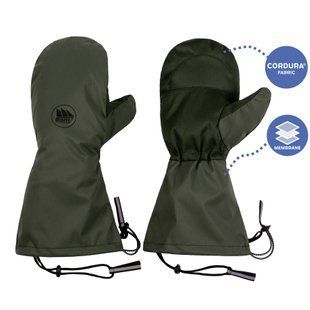
Membrane Gloves
In cold and wet weather, protecting the hands from moisture is just as important as protecting the torso and legs.
A membrane layer in gloves helps protect both the hands and insulation from external moisture.
These gloves are used for winter hiking, mountaineering, skiing, ski touring, and other activities involving snow and wet conditions.
When choosing membrane gloves, the membrane specifications are only part of the equation. Insulation, cuff construction, palm durability, and the ability to handle equipment comfortably are also important.
How to Care for Membrane Clothing
Proper care directly affects how effectively membrane clothing performs.
One common mistake is avoiding washing membrane garments altogether. Sweat, body oils, dust, and other contaminants accumulate on the fabric and can reduce its functional performance.
Membrane clothing should therefore be cleaned according to the care instructions provided by the manufacturer of the particular garment.
Several basic rules are useful when caring for membrane clothing:
-
always check the care label before washing;
-
use detergents designed for membrane or technical clothing;
-
do not use fabric softener;
-
avoid aggressive bleach and products that can leave unwanted residues on the fabric;
-
rinse detergent thoroughly from the garment;
-
dry according to the manufacturer's instructions.
Special attention should also be paid to the fabric's external DWR — Durable Water Repellent — treatment.
DWR helps water form droplets and roll off the surface instead of saturating the outer fabric.
Over time, DWR can lose its effectiveness. When the face fabric begins to absorb water quickly and remains wet, the membrane itself may still be waterproof, but overall breathability and comfort can decrease.
In this situation, the water-repellent treatment can be restored according to the recommendations provided by the garment manufacturer and the care product manufacturer.
How to Choose Membrane Clothing for Your Needs
There is no single membrane that is optimal for every outdoor activity.
For city use and travel, comfort, easy maintenance, and sufficient protection from everyday precipitation may be the main priorities.
For trekking and multi-day hiking, the balance between waterproofness, breathability, weight, and durability becomes particularly important.
For running and other high-intensity activities, low weight, high breathability, and effective ventilation are especially valuable.
For mountaineering and severe weather, reliable protection from precipitation and wind, material durability, and the overall construction of the garment become the main priorities.
It is also important to remember that membrane specifications are only one part of the overall system. Seam quality and sealing, hood construction, zippers, ventilation, cuffs, and fit all directly affect how well the finished garment protects you from bad weather.
For this reason, membrane outdoor clothing should not be selected according to a single maximum rating. Instead, consider the combination of characteristics that best matches the conditions in which the garment will actually be used.
Clothing with a membrane is an outer protective layer for situations where rain, wet snow, and wind become a real part of your route. Properly selected waterproof clothing provides protection in challenging weather, while sufficient breathability and ventilation help the entire clothing system remain more comfortable during active movement.