

|
Quantity
|
Out of stock
|
||
|
|
|||
|
|
|||
FRAM Insulated Hiking Jackets — Warmth for Winter Hiking and the Mountains
An insulated hiking jacket is an essential part of your gear for winter hiking, mountain adventures, high-altitude climbing, and travel in cold weather. Its main purpose is to reduce heat loss and provide reliable thermal insulation when temperatures drop, the wind picks up, or your level of physical activity decreases.
In the mountains, insulation is more than a matter of comfort. At altitude, weather conditions can change quickly, while low temperatures, strong winds, and long stops significantly increase heat loss. That's why a warm hiking jacket needs to provide enough insulation for the expected conditions while remaining lightweight and packable — after all, everything you bring into the mountains has to be carried.
Finding the right balance between warmth, weight, and packability is therefore one of the main priorities when choosing insulated clothing for mountain use.
What Is an Insulated Jacket Used For?
Unlike a windbreaker or membrane shell, the primary purpose of an insulated jacket is thermal insulation.
During an active ascent, your body generates a lot of heat, so wearing too much insulation can quickly lead to overheating. But as soon as you stop for a break, reach a cold exposed ridge, or settle into camp after the day's route, the need for insulation increases significantly.
That's why an outdoor insulated jacket often stays in your backpack while you're moving and comes out during breaks, at camp, or whenever the temperature drops.
Insulated jackets are used for winter hiking, mountaineering, mountain trekking, high-altitude expeditions, camping, and other outdoor activities in cold weather.
Why Is Reliable Insulation So Important at Altitude?
Conditions become increasingly demanding as you gain altitude. Temperatures drop, strong winds can intensify the effects of the cold, and opportunities to quickly warm up or find shelter become more limited.
The moments when you stop moving are particularly important. During a rest break, while belaying a climbing partner, working at a belay station, or spending time at camp, your body produces less heat even though the environment remains just as cold.
In these situations, reliable thermal insulation helps reduce heat loss and maintain a more comfortable body temperature.
For high-altitude routes, an insulated jacket is therefore not simply an extra warm layer carried "just in case." It is a functional and important part of your mountain clothing system.
Lightweight, Packable, and Warm: Three Qualities That Need to Work Together
Generally, the warmer the jacket, the more insulation is needed to create an effective thermal barrier. But in the mountains, simply making a jacket as thick as possible isn't necessarily the best solution.
Every additional gram has to be carried, while bulky gear takes up valuable space in your backpack.
A good jacket for winter hiking should therefore provide effective thermal insulation without unnecessary weight and bulk.
Warmth determines how effectively the jacket helps reduce heat loss in cold conditions.
Weight becomes especially important on long routes, climbs, and expeditions, where the total weight of your gear directly affects your pace and energy expenditure.
Packability determines how little space the jacket takes up in your backpack and how easy it is to carry until additional insulation is needed.
The ideal balance between these characteristics depends on temperature, altitude, route duration, and the type of activity.
Termoloft — Synthetic Insulation for Outdoor Clothing
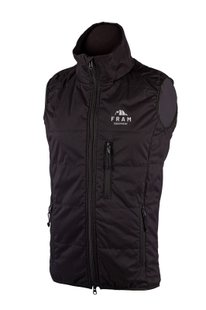
FRAM insulated jackets use Termoloft synthetic insulation, designed to create an effective insulating layer inside the garment.
This type of insulation works by creating a layer that traps air and helps reduce the amount of body heat lost to the surrounding environment.
Synthetic insulation is practical for outdoor use, where clothing may come into contact with moisture, be exposed to changeable weather, and repeatedly be compressed and packed into a backpack.
Termoloft makes it possible to create warm hiking jackets designed to balance thermal insulation, weight, and practicality for use in the mountains and during travel.
Wearing an Insulated Jacket During Active Movement
The warmest jacket isn't always the best jacket to wear while moving.
During an intense ascent with a backpack, your body can generate so much heat that a winter hiking jacket becomes too warm. Excessive insulation can lead to heavy perspiration, and in cold conditions a damp base layer can become a serious problem once you stop moving.
That's why it's important to adjust your clothing system according to your level of activity.
During intense movement, you may use thermal underwear, fleece, Softshell, or other lighter layers while keeping your insulated jacket packed in your backpack for breaks.
During slower movement in extremely cold weather, however, you may need to wear additional insulation continuously.
An Insulated Jacket for Breaks and Camp
The benefits of a warm jacket become particularly noticeable when you stop moving.
Once you stop, your body produces less heat and begins to cool down. Rather than waiting until you start feeling cold, it's better to put on your insulating layer soon after stopping.
This is especially important during winter hiking, at altitude, and in strong winds.
At camp, a warm hiking jacket helps you stay comfortable while preparing food, organizing equipment, and recovering after a long day on the trail, when physical activity alone is no longer enough to keep you warm.
How Does an Insulated Jacket Work in a Layering System?
In the mountains, it is generally more effective to build a clothing system from several functional layers rather than relying on one extremely warm garment.
The base layer helps move moisture away from the body.
The mid layer adds insulation and helps regulate temperature while you're moving.
The insulated jacket provides an additional reserve of warmth in cold weather and during periods of low activity.
The outer membrane shell, when necessary, protects the entire system from strong wind, snow, and precipitation.
Combining these layers allows you to adapt your clothing to changes in weather, altitude, and activity level throughout the route.
How to Choose an Insulated Hiking Jacket
When choosing a jacket, don't focus only on how warm it feels. Consider the conditions in which you actually plan to use it.
1. Consider the temperature range.
A jacket for cool transitional weather and a jacket for winter hiking require different levels of insulation. The lower the expected temperatures and the longer the periods of inactivity, the more insulation you may need.
2. Consider your activity level.
Too much insulation can be a disadvantage during high-intensity movement. For slow movement, long breaks, and time at camp, on the other hand, additional warmth becomes a priority.
3. Consider the altitude.
For high-altitude routes, it's important to have an adequate insulation reserve for sudden temperature drops, strong winds, unexpected delays, or extended periods without active movement.
4. Consider the weight.
For multi-day mountain hiking and climbing, every piece of equipment has to be carried. Look for the right balance between thermal performance and weight.
5. Check the packed size.
If your jacket will spend most of the day in your backpack, how much space it takes up when packed becomes an important consideration.
6. Consider the rest of your layering system.
The jacket should work comfortably with thermal underwear, fleece, and other layers. Its fit should provide enough room for the necessary insulation underneath without restricting movement.
Which Insulated Jacket Do You Need?
For travel and everyday use in cold weather, look for a versatile balance of warmth, weight, and comfort.
For winter hiking, prioritize effective thermal insulation, packability, and the ability to quickly add a warm layer whenever you stop.
For mountaineering and high-altitude mountain hiking, the goal is to achieve effective insulation at the lowest practical weight and packed volume for the expected conditions.
For camp and extended rest stops, the priority shifts toward warmth, as your body generates significantly less heat during periods of low activity.
FRAM Insulated Jackets for Winter Hiking and Mountain Adventures
FRAM insulated hiking jackets with Termoloft synthetic insulation are designed for situations where you need a reliable reserve of warmth on the route.
During winter hiking, they help retain warmth during breaks and in cold weather. In the mountains and at altitude, they become an important part of your insulation system. During travel, they provide comfort when temperatures fall below your usual range.
When choosing an outdoor insulated jacket, finding the right balance between three characteristics is essential: warmth, weight, and packability. A well-designed jacket for winter hiking provides the thermal insulation you need without becoming unnecessary weight and bulk in your backpack.