A new mountaineering film, Tenzing, has recently been released by renowned director Jennifer Peedom.
It seems we have reached a time when classic stories, once known to us primarily through books, are beginning to come alive on screen. And not just come alive, but become accessible to a much wider audience. Although not entirely without letters — the film has Ukrainian subtitles. It is somewhat reminiscent of the colorization of old footage from the previous century.
However, the story is told not as a documentary, but as a full-fledged feature film. It stays as close to real events as possible, while, of course, incorporating certain artistic interpretations for dramatic purposes. It is the drama that keeps us following the characters, empathizing with them, and engaged throughout the film.
Everest, 1953: The Story of Tenzing Norgay
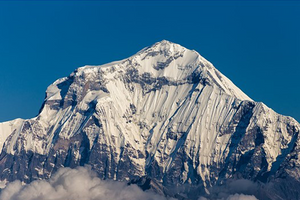
The film tells the story of the first ascent of Everest in 1953 in considerable detail, as much as can be covered in two hours. Everything is presented through the perspective of the main character, Tenzing Norgay, the mountaineer who became one of the first two people to reach the highest peak in the world.
This is the story of a man whose contribution to the ascent remained in the shadows for a long time. A man who may have met George Mallory in his childhood — or perhaps that episode is simply a fictional addition.
It is particularly interesting to see how the film explores Tenzing’s position among the Sherpas. He was not Sherpa by origin, but came from another ethnic group and grew up among them. This sense of being an outsider, the rejection he faced from some members of the community, and the conflicts within it add another layer of drama to the story.
His journey is not just the story of a mountaineer, but also of a person who had to prove his own worth.
More Than a Mountaineer: A Person
One of the film’s greatest strengths is that the main character is portrayed not only during the expedition. We see his childhood, his family, the environment in which he grew up, and the people who shaped his character and motivation.
These are strong directorial choices that help us understand Tenzing not merely as a mountaineer, but as a person. And that is precisely what makes the film worth watching.
Mountaineering Gear and the Spirit of the Era
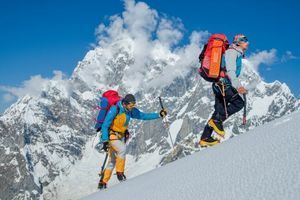
It is also worth highlighting how well the film captures the spirit of the era: the techniques of movement, the mountaineering equipment of the time, and the atmosphere of the expeditions. Without any overtly fantastical inventions.
This is complemented by excellent location shooting, which allows us to feel the scale and challenges of the mountain environment.
Overall, Tenzing certainly deserves a place among good outdoor films.
Artistic License and Historical Accuracy
Of course, there are artistic liberties taken for the sake of the story. For example, certain aspects of Colonel John Hunt’s role in organizing the expedition and the interactions between its members are presented in a somewhat dramatized way.
The historical reality was more complex than its on-screen portrayal. But to understand these nuances, it is worth reading the original sources — including Tenzing’s own books.
And, of course, going to the mountains.